 Undergraduate
 On August 10, 2026, Dr. Le Van Lam - Vice President of Can Tho University (CTU), together with representatives of relevant units, held a working session with Prof. Albert Yeu-Chung Lin - A leading expert in semiconductors and artificial intelligence (AI) from National Yang Ming Chiao Tung University (Taiwan). The meeting provided an opportunity to exchange views on emerging technology trends, explore potential areas of collaboration, and discuss directions for strengthening CTU’s education and research capacity in high-tech fields.

The working session was held at CTU’s Administration Building
Eploring Directions for Collaboration and Strengtxhening Technological Capabilities
At the working session, Dr. Le Van Lam and Prof. Albert Yeu-Chung Lin discussed the rapid developments and shifts taking place in semiconductors, AI, and next-generation computing technologies. They also explored opportunities to connect CTU’s expertise and capabilities with international networks of universities, research institutions, and technology partners.
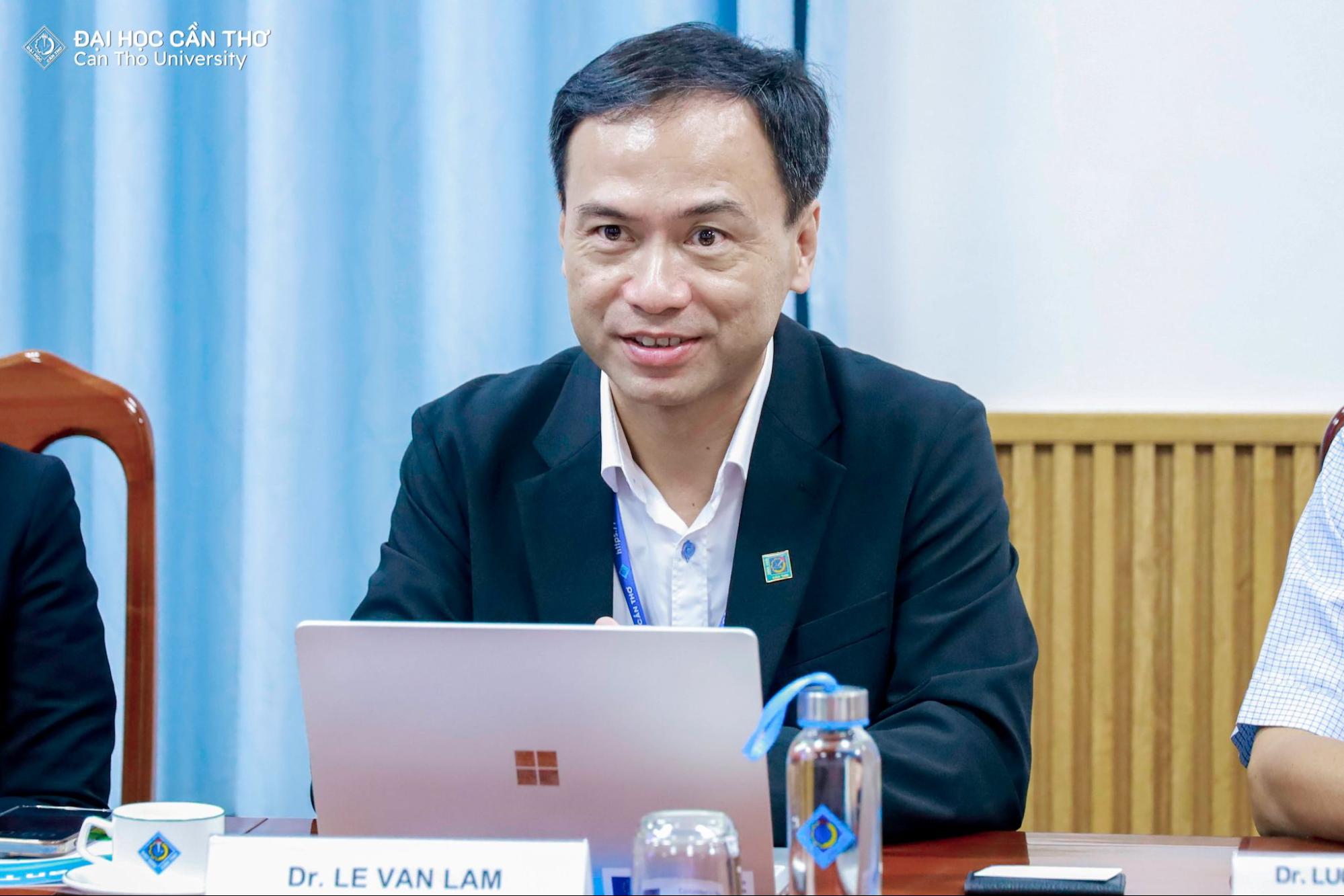
Dr. Le Van Lam expressed his appreciation to Prof. Albert Yeu-Chung Lin for taking the time to visit CTU and share his insights into semiconductors, AI, and the ongoing transformations in the global technology ecosystem, offering valuable perspectives for CTU’s education, research, and high-tech talent development
One of the key directions highlighted by Prof. Albert Yeu-Chung Lin was the development of capabilities in strategic and emerging fields such as semiconductors, AI, and quantum computing. In this regard, developing high-quality human resources is essential, particularly as the rapid advancement of AI and automation continues to reshape the skills and competencies required of future engineers, researchers, and technology professionals.
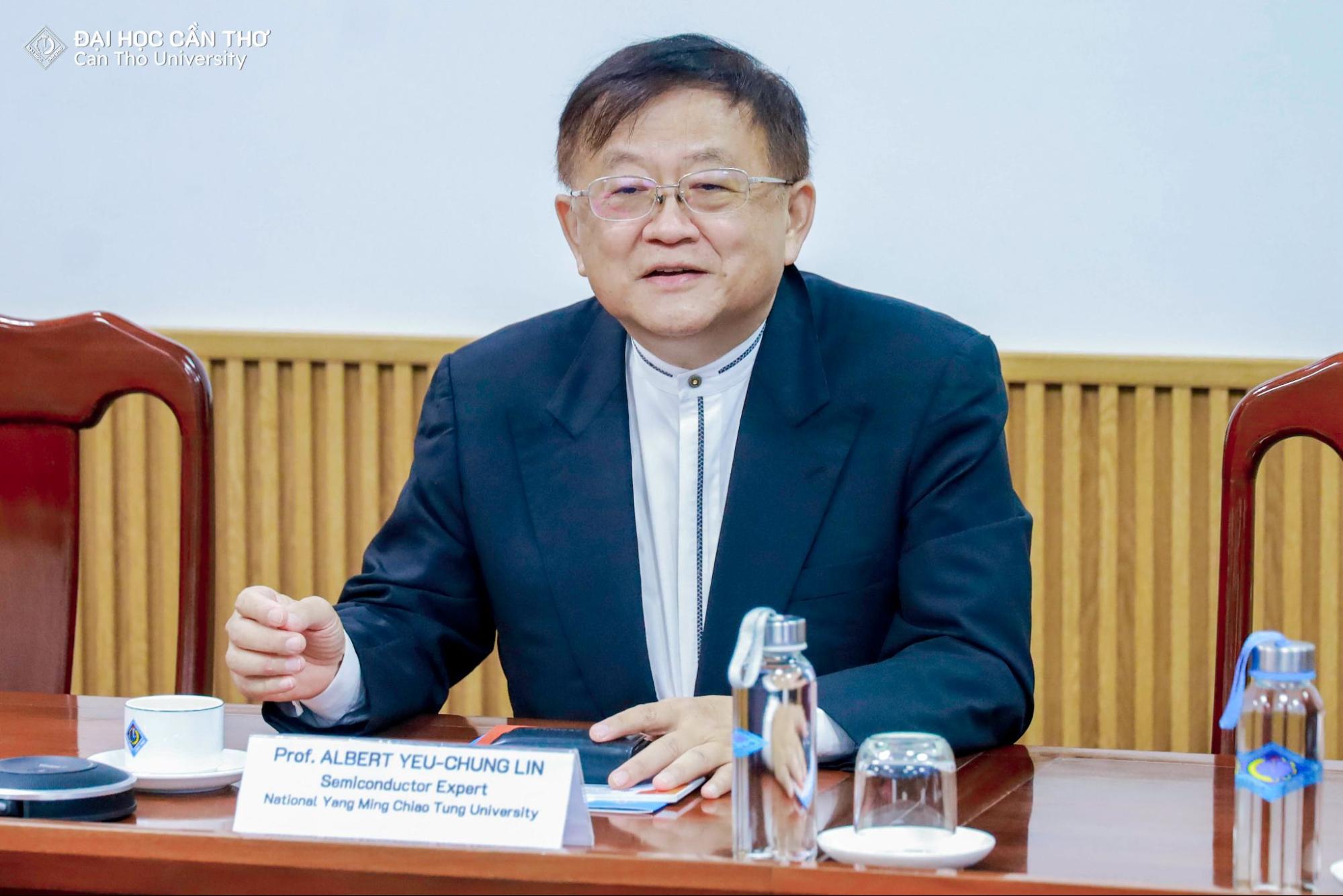
Prof. Albert Yeu-Chung Lin emphasized the importance of developing high-quality human resources as a foundation for advancing high-tech fields
Prof. Albert Yeu-Chung Lin also shared perspectives on models for connecting and sharing research infrastructure among universities, rather than having each institution independently invest in costly and highly specialized laboratories. Under this approach, assessing, connecting, and sharing existing equipment and laboratory capabilities across institutions could improve the efficiency of resource utilization, broaden access to advanced technologies, and create greater opportunities for inter-university and interdisciplinary research.

Group photo at the working session
The discussions offered CTU not only broader perspectives on how advanced technology ecosystems organize resources, research infrastructure, and collaborative networks, but also new approaches to connecting education and research capabilities, sharing infrastructure, and expanding international partnerships. These directions are particularly relevant as CTU continues to develop emerging fields in science and technology while expanding opportunities for students, faculty members, and research groups to engage in learning, research, and academic collaboration.
Workshop on Semiconductor Technology and AI: Understanding Emerging Trends in Next-Generation Technologies
As part of his visit to CTU, Prof. Albert Yeu-Chung Lin led a workshop on Semiconductor Technology and Artificial Intelligence, offering CTU faculty members and students an overview of the increasingly close relationship between AI and the semiconductor industry.

The workshop drew a large number of CTU faculty members and students
Drawing on the rapid advances in AI in recent years, the workshop examined how AI is increasingly being integrated across various stages of the semiconductor ecosystem, from chip design and wafer fabrication to packaging and testing, as well as the development of materials and devices. This convergence is also creating new demands for education and training, as future semiconductor professionals will need not only strong disciplinary foundations but also interdisciplinary capabilities, a strong technological mindset, and the ability to adapt to rapid technological change. The workshop therefore opened up new approaches to semiconductor workforce development in response to the increasingly deep convergence of AI, automation, and semiconductor technologies.

Prof. Albert Yeu-Chung Lin delivered a presentation on Semiconductors and AI
The workshop also explored Vietnam’s opportunities within the broader semiconductor and AI ecosystem. As highlighted in the presentation, Vietnam’s established electronics manufacturing base could provide a foundation for strengthening linkages with the semiconductor industry, alongside emerging opportunities in chip design, packaging and testing, and fields related to physical AI. Strengthening connections with technology ecosystems across East Asia was also identified as an important pathway for Vietnam to deepen its participation in global technology value chains.
Prof. Albert Yeu-Chung Lin’s visit and engagement with CTU took place as the University continues to advance the internationalization of education, strengthen research capacity, and expand collaboration in strategic science and technology fields. Against this backdrop, discussions on semiconductors and AI not only broadened faculty and students’ perspectives on the rapid technological shifts underway, but also opened up new approaches to education, research, and the development of high-quality talent in high-tech fields at CTU.

CTU faculty members and students engaged in discussion and Q&A during the workshop
The connections opened up through the visit provide CTU with further opportunities to strengthen academic exchange, deepen collaboration with international partners, and gradually engage more closely with advanced scientific and technological networks. More importantly, these connections can create new opportunities for faculty members and students to access emerging knowledge, engage with leading experts, and develop the capabilities needed to contribute to high-tech fields shaping the region and the world.
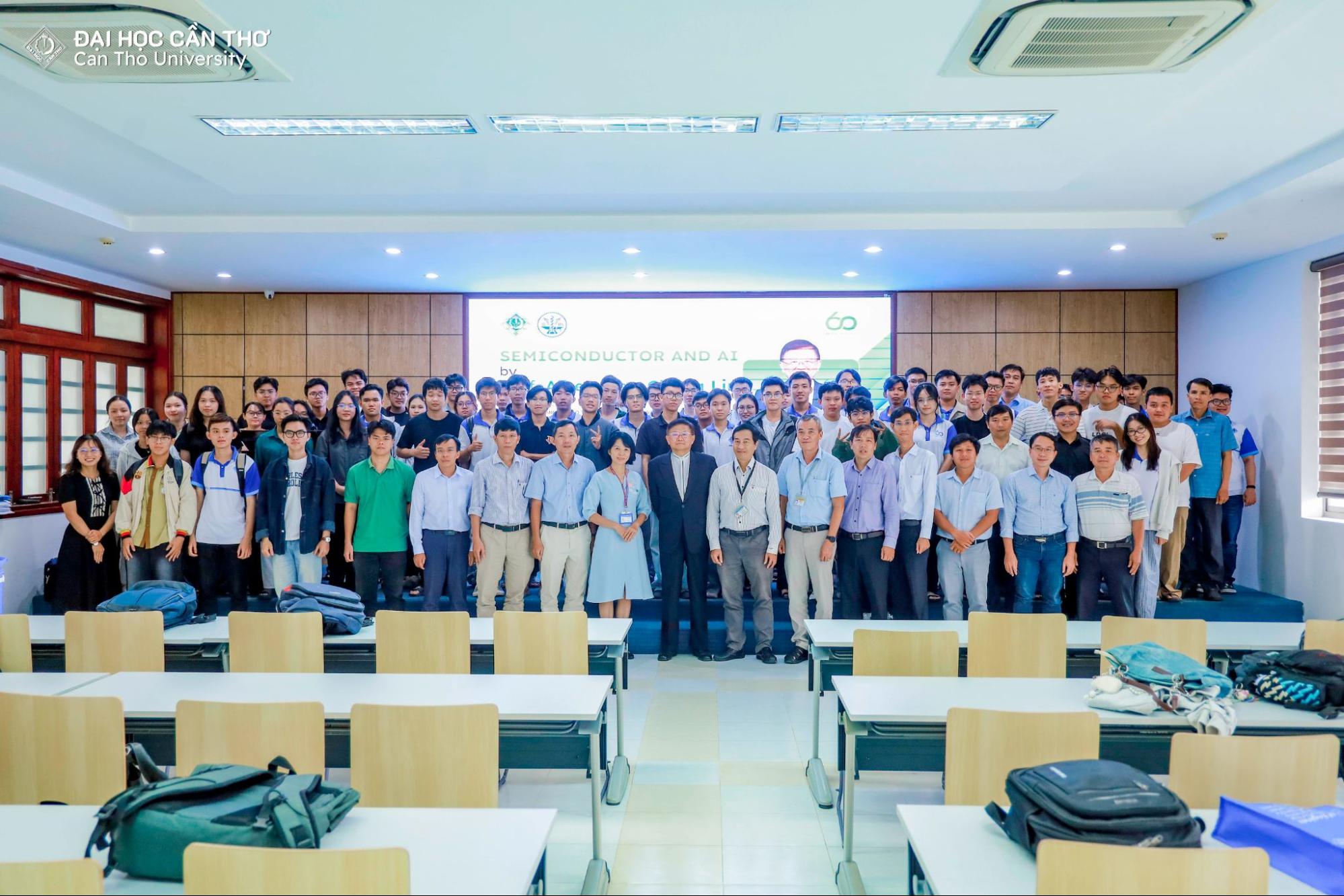
Group photo at the workshop
(Website Editorial Board)