
 Undergraduate
 More than merely a passage of time, six decades have constituted a journey that has forged resilience, shaped enduring values, and affirmed a stature built upon determination, knowledge, and an unwavering drive for continuous advancement. From its humble beginnings in the heart of the Mekong Delta, Can Tho University (CTU) has steadily established itself as a leading national center of academic and cultural excellence - where knowledge converges and radiates, contributing to and driving the comprehensive socio-economic development of the Mekong Delta region.
Building upon this solid foundation, a new historic chapter was opened. On March 31, 2026, CTU held a ceremony to commemorate its 60th anniversary (1966-2026). This ceremony not only marked a significant milestone but also stood as a declaration of a new vision - one in which the University enters a new phase of development with greater scale, broader missions, and a heightened sense of responsibility to society.
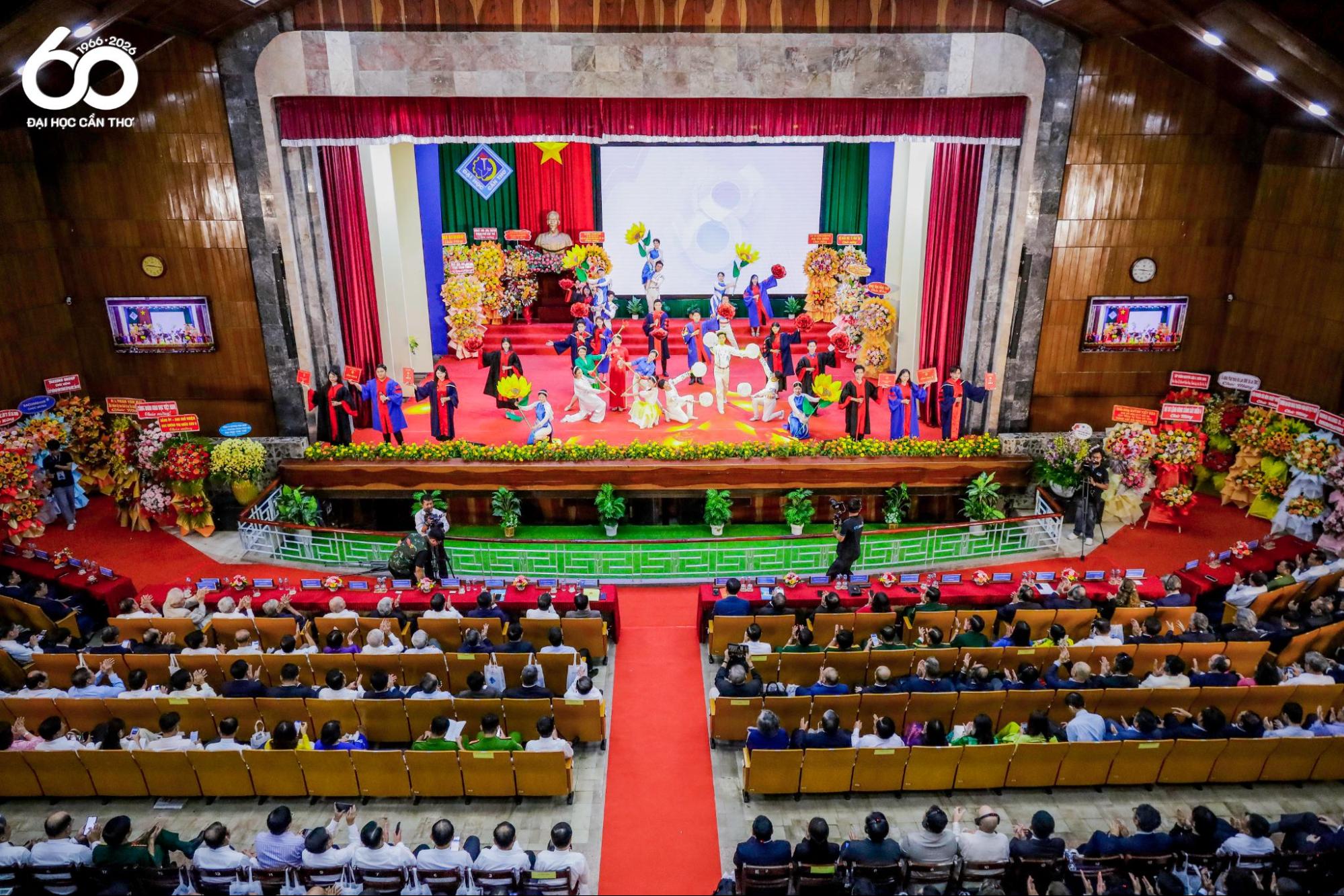
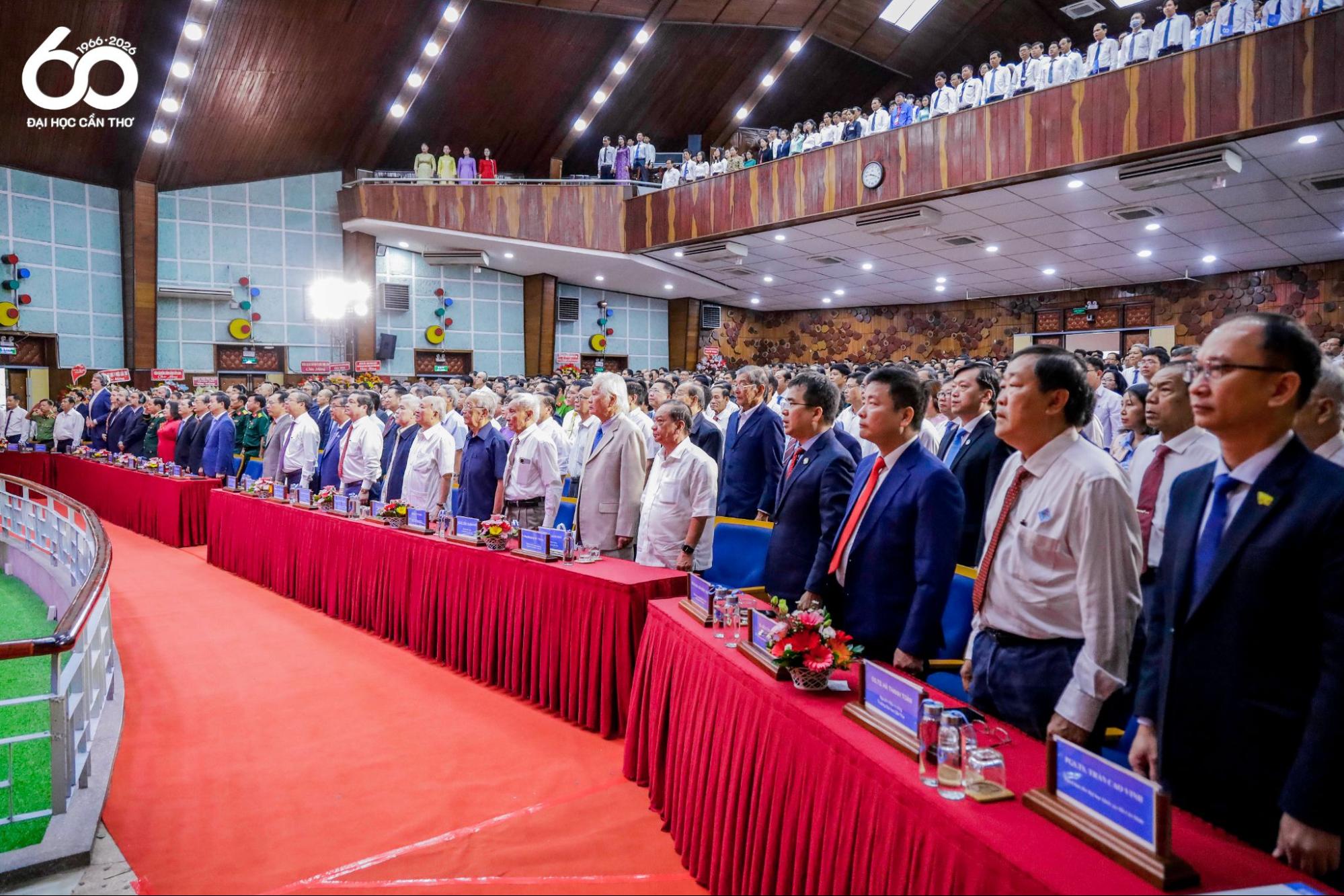
The ceremony was held at the Turtle Hall - CTU, with the participation of more than 1,200 delegates, including representatives from the central-level leadership, local authorities, diplomatic missions, international organizations, and educational institutions across the country
The ceremony brought together a distinguished assembly of representatives from central and local authorities, higher education institutions, international organizations, enterprises, and partners from Vietnam and abroad. Representing central-level leadership was Assoc. Prof. Dr. Hoang Minh Son - Member of the Party Central Committee and Acting Minister of Education and Training; along with incumbent and former leaders of the Party, the State, and various ministries and agencies. Representatives from the armed forces included Major General Nguyen Minh Trieu - Deputy Commander of Military Region 9; Senior Colonel Nguyen Thai Duong - Deputy Political Commissar of Coast Guard Region 4 Command; and Major General Huynh Viet Hoa - Director of Can Tho City Police. In addition, CTU was honored to receive the thoughtful attention of leaders of the Party and the State. Although unable to attend in person, they sent congratulatory floral arrangements and gifts, expressing their regard and recognition for the University. CTU was honored to receive congratulatory floral arrangements from: Mr. Tran Thanh Man - Member of the Politburo and Chairman of the National Assembly of the Socialist Republic of Vietnam; Ms. Vo Thi Anh Xuan - Member of the Party Central Secretariat and Vice President of the Socialist Republic of Vietnam; and Mr. Mai Van Chinh - Deputy Prime Minister of the Socialist Republic of Vietnam.
At the provincial and municipal level, participants included Mr. Le Quang Tung – Member of the Party Central Committee and Secretary of the Can Tho City Party Committee; Ms. Ho Thi Hoang Yen - Member of the Party Central Committee and Standing Deputy Secretary of the Vinh Long Provincial Party Committee; Mr. Truong Canh Tuyen - Deputy Secretary of the Can Tho City Party Committee and Chairman of the Can Tho People’s Committee; and Mr. Huynh Chi Nguyen - Member of the Provincial Party Committee and Vice Chairman of the Ca Mau Provincial People’s Committee. The event also gathered representatives from 49 universities, colleges, academies, and research institutes nationwide, as well as continuing education centers across provinces and cities, demonstrating the strong cohesion within Vietnam’s higher education network.
Notably, the ceremony welcomed a wide range of international delegates from diplomatic missions, global organizations, and prestigious universities, including representatives from the Governments of the Netherlands, the Russian Federation, and Australia; the International Rice Research Institute (IRRI – Philippines); CT Group; the Chen-Yung Memorial Foundation (Taiwan); the French Agricultural Research Centre for International Development (CIRAD); the Agence Universitaire de la Francophonie (AUF) Asia-Pacific; the Australian Centre for International Agricultural Research (ACIAR); Princeton in Asia; the University of Namur (Belgium); Sorsogon State University (Philippines); the Japan International Cooperation Agency (JICA); the Japan External Trade Organization (JETRO); Takesho Food Vietnam Co., Ltd.; Deh Yu College of Nursing and Health (Taiwan); Faraday Technology Vietnam Co., Ltd.; the Commonwealth Scientific and Industrial Research Organisation (CSIRO – Australia); the French National Research Institute for Sustainable Development (IRD); the German Agency for International Cooperation (GIZ); the Food and Agriculture Organization of the United Nations (FAO); Agritree Co., Ltd. (Japan); Rangsit University (Thailand); and the University of Tours (France).
From CTU, the ceremony was attended by Prof. Dr. Nguyen Thanh Phuong – Secretary of the Party Committee; Assoc. Prof. Dr. Tran Trung Tinh – Rector; members of the Party Executive Committee and the Board of Rectors; former leaders of the University; along with generations of faculty members, staff, and a large number of outstanding doctoral candidates, graduate students, and undergraduates.
At the confluence of tradition and a forward-looking future, the ceremony emerged as a convergence of pride, gratitude, and aspiration. Building upon its six-decade legacy, CTU continues to affirm its pioneering role in developing high-quality human resources, advancing scientific research, and generating sustainable values, thereby contributing meaningfully to the prosperity of the Mekong Delta region and the nation in this new era.
Opening the ceremony, an overview video highlighting CTU’s 60-year journey was presented, vividly revisiting key milestones and the University’s enduring journey of growth and development.
In his address, Prof. Dr. Nguyen Thanh Phuong reflected on CTU’s proud six-decade journey, reaffirming the core values that have shaped its identity. He emphasized that since its establishment, CTU has been envisioned as a multidisciplinary institution - a model that has been consistently upheld. From its early days with only four academic programs - primarily in the social sciences - CTU has now expanded to 214 programs across undergraduate, master’s, and doctoral levels, with nearly 50,000 learners currently enrolled. Over the past sixty years, the University has trained more than 265,000 graduates at the bachelor’s, master’s, and doctoral levels across diverse fields for the Mekong Delta and the country as a whole. CTU takes great pride in its alumni, many of whom have assumed key leadership positions at local and national levels, contributing significantly to governance, socio-economic development, and national progress.
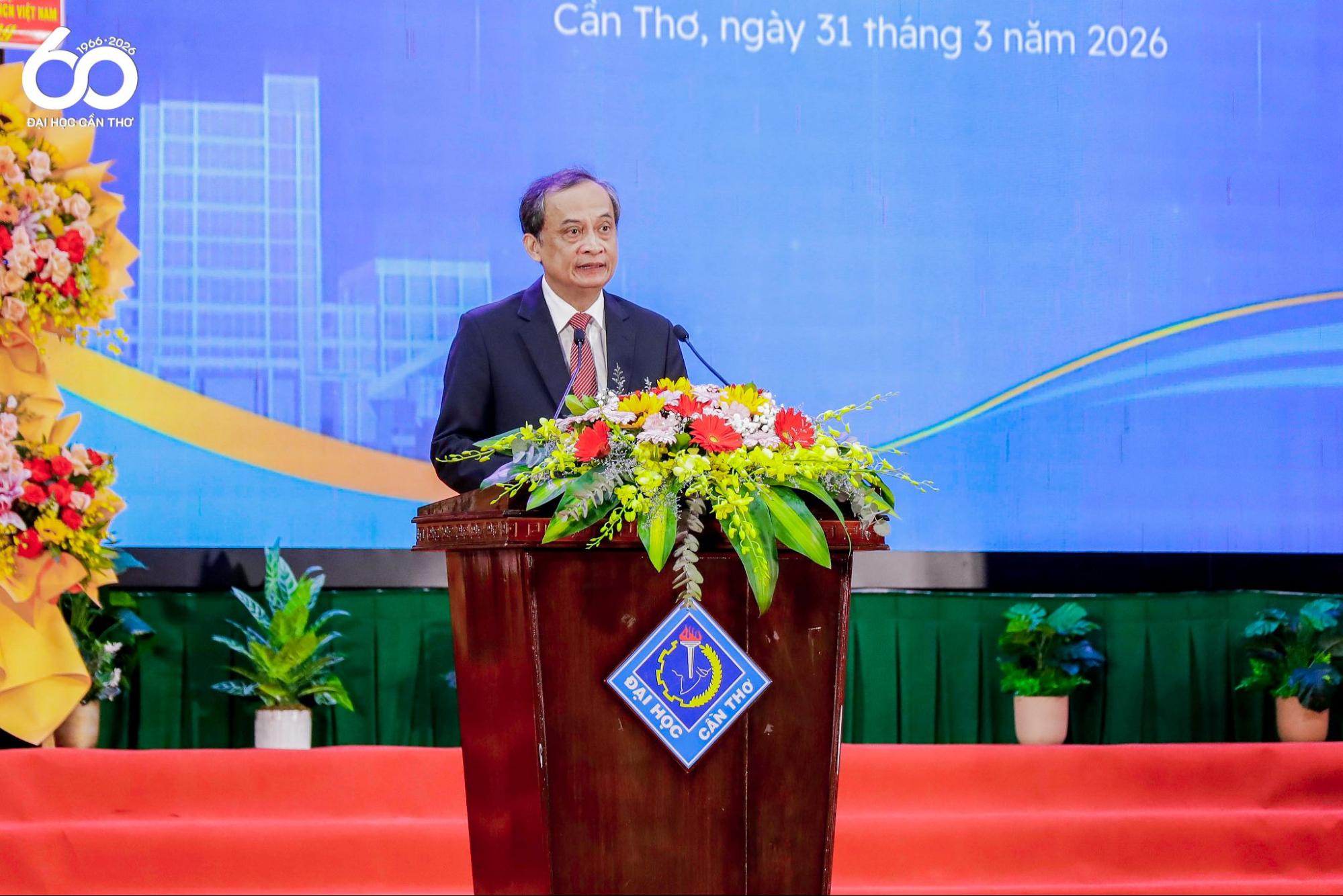
Reflecting on this proud six-decade journey, Prof. Dr. Nguyen Thanh Phuong expressed his expectations for the future: “Ahead of CTU lie both opportunities and challenges intertwined, requiring us to continue innovating more boldly, more creatively, and with greater determination. Yet, with the foundation forged through generations, with our spirit of unity and aspiration for advancement, we have every confidence to move forward. I hope that we will continue to join hands in nurturing and keeping alive the proud flame of CTU’s enduring tradition”
CTU has consistently identified its internal strength as a key driver of its advancement and sustainable development. Over the years, the University has developed a dedicated workforce of academic, administrative, and support staff who are highly qualified, dynamic, innovative, and deeply committed to their profession. Currently, CTU has more than 1,800 staff members, including over 1,100 lecturers. It is among the higher education institutions in Vietnam with a high proportion of doctoral degree holders, with PhD holders accounting for 58.4% of its academic staff, along with more than 200 professors and associate professors. This strong human capital constitutes a critical foundation, ensuring the University’s mission of delivering high-quality education and effectively contributing to the socio-economic development of the Mekong Delta and the nation. In terms of global recognition, CTU continues to strengthen its academic standing in international rankings. According to the QS World University Rankings 2026, CTU is ranked in the 1,201–1,400 band globally and 493rd in Asia, placing it among the top universities in Vietnam. A milestone achievement came in 2020, when CTU’s Agriculture and Fisheries discipline entered the global top 251–300 for the first time. This achievement underscores the University’s commitment to international integration and affirms its growing prestige within the global academic community.
In his remarks at the ceremony, Assoc. Prof. Dr. Hoang Minh Son emphasized that higher education must serve as a direct driver of economic growth; supply high-quality human resources for key economic sectors; generate new knowledge and technologies; and foster innovation in businesses and society. These expectations place significant responsibilities on CTU in the years ahead. The Acting Minister of Education and Training outlined several key directions and priority tasks for the University in the coming period:
First, to strengthen the direct and comprehensive leadership role of Party organizations; to promote unity, democracy, and collective intelligence in all activities; to promptly implement the policy of having the Party Secretary concurrently serve as the University Director; and to consolidate key leadership and management positions at both the University and its affiliated units.
Second, to promptly review and refine the University’s development strategy, translating the orientations set forth in Resolution No. 57 and Resolution No. 71, as well as the provisions of the 2025 Higher Education Law, into concrete actions for submission to the Ministry of Education and Training for approval and implementation.
Third, to develop a highly qualified corps of administrators and lecturers by implementing effective policies to train, attract, and retain talented faculty members and scientists; and to promote active engagement in scientific research, technology transfer, and international collaboration.
Fourth, to modernize infrastructure and physical facilities by accelerating the preparation and implementation of major infrastructure investment projects, particularly the development of advanced research centers and key laboratories; and to proactively mobilize resources to enhance teaching and research equipment.
Fifth, to fundamentally innovate curricula and training methods toward modern, interdisciplinary approaches aligned with the practical needs of the region and the nation; to intensively apply digital technologies and artificial intelligence in education; to develop advanced and talent-oriented programs in strategic fields such as artificial intelligence, semiconductor technology, biotechnology, and life sciences; and to closely align training with labor market demands and regional socio-economic development strategies.
Sixth, to intensify scientific research and technology transfer, closely aligned with the needs of rapid and sustainable development in the Mekong Delta - particularly in high-tech agriculture, biotechnology, green economy, circular economy, and climate change adaptation. CTU should strive to become a leading innovation hub of the region and a trusted policy advisory center for local governments across the Mekong Delta.
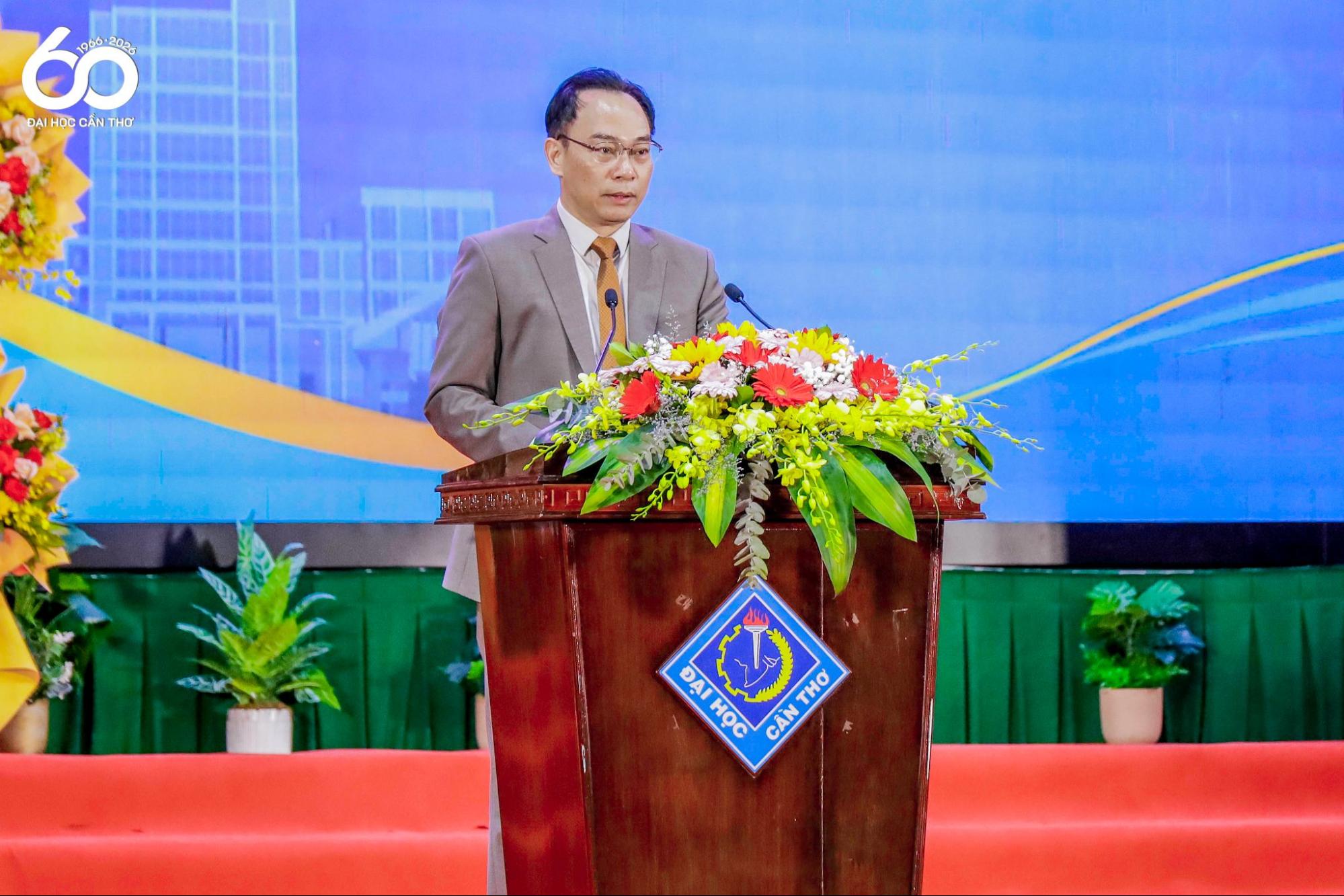
On behalf of the leadership of the Ministry of Education and Training, Assoc. Prof. Dr. Hoang Minh Son commended, recognized, and congratulated the remarkable achievements attained by generations of faculty members and students of CTU over the past six decades
In his remarks, Mr. Le Quang Tung emphasized that six decades of dedication by generations of CTU scientists stand as a vivid testament to innovative thinking—from contributing to national food security and positioning the region as the country’s leading exporter of agricultural and fisheries products, to pioneering the application of the Internet of Things (IoT) and artificial intelligence (AI) in smart agriculture. These contributions have affirmed the University's stature not only as an academic institution but also as a trusted partner that directly addresses livelihood challenges and contributes to the sustainable development of Can Tho City and the Mekong Delta as a whole. He also conveyed the City’s deep appreciation for the quiet yet enduring contributions of the University’s experts and scientists in the journey toward building Can Tho into a modern, smart city.
Looking ahead, to further strengthen cooperation between the City and the University, several key priorities were outlined:
First, to intensify collaboration in developing high-quality human resources, particularly in fields with strong demand such as information technology, logistics, high-tech agriculture, urban management, environmental management, and sustainable development.
Second, to promote joint scientific research, policy advisory services, and technology transfer activities that directly support the City’s socio-economic development programs and projects—especially in areas such as climate change adaptation, resource management, green economy, and circular economy. At the same time, to develop and strengthen the City’s innovation ecosystem, with CTU playing a central role in connecting government, academia, and industry.
Third, as the University advances toward a modern multidisciplinary model, it should prioritize attracting international students and experts to study and work in Can Tho, thereby positioning the city as a leading hub for international education in the region and enhancing its image as a dynamic, knowledge-driven, and welcoming city on the global stage.
Fourth, to strengthen coordination in effectively implementing the project titled “Upgrading Can Tho University into a center for high-quality human resource training, scientific research, and application for Can Tho City and the Mekong Delta region,” in accordance with Resolution No. 98/NQ-CP (dated August 30, 2021), which outlines the Government’s action program for implementing Politburo Resolution No. 59-NQ/TW on the development of Can Tho City toward 2030, with a vision to 2045.
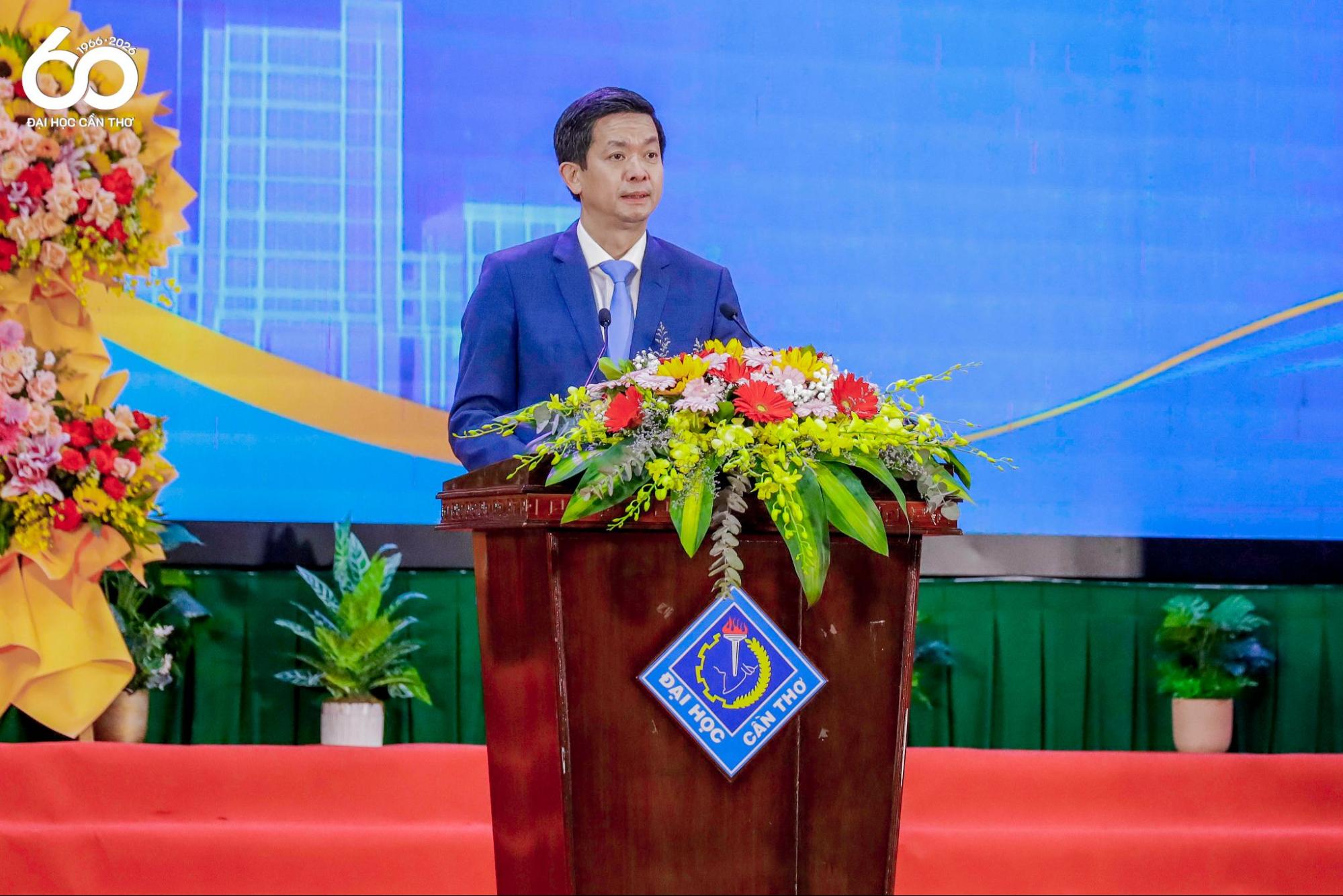
Mr. Le Quang Tung affirmed that CTU has risen to become a comprehensive, multidisciplinary university, firmly establishing its position as one of the nation’s leading centers for education and scientific research
On this momentous occasion, CTU was honored to be awarded ceremonial banners and Certificates of Merit from the People’s Committee of Can Tho City and the provinces of An Giang, Ca Mau, Dong Thap, and Vinh Long in recognition of its outstanding contributions to the region’s overall development. Notably, within the program, a representative of the Ministry of Education and Training announced the decision of the State President to confer the Second-Class Labor Order upon Prof. Dr. Nguyen Thanh Phuong and the Third-Class Labor Order upon Assoc. Prof. Dr. Mai Van Nam for their outstanding achievements, contributing to national development and the protection of the Fatherland.
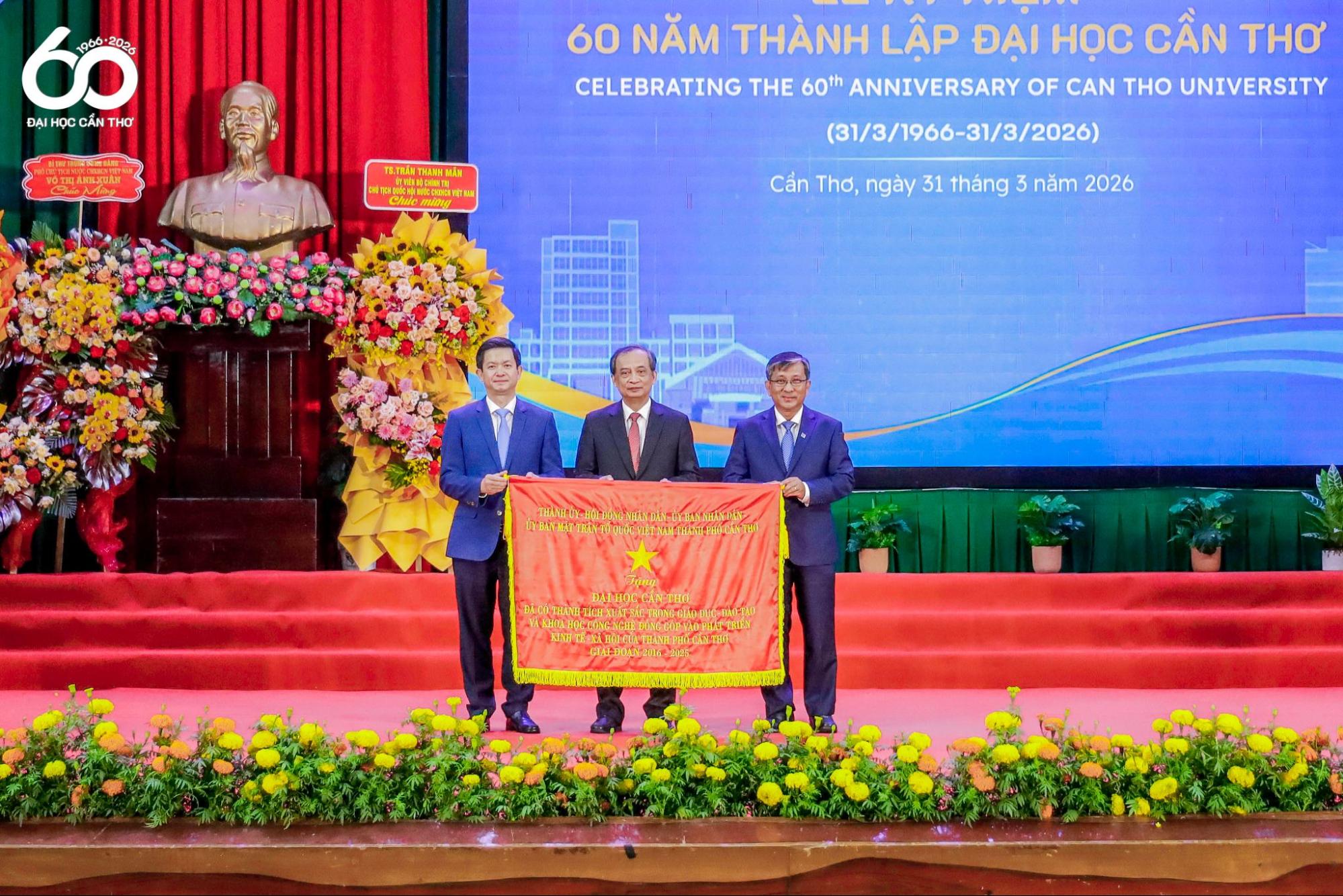
Representing the leadership of Can Tho City, Le Quang Tung (left) presented the ceremonial banner to CTU in recognition of its outstanding achievements in education and training, and science and technology, contributing to the socio-economic development of Can Tho City during the 2016–2025 period
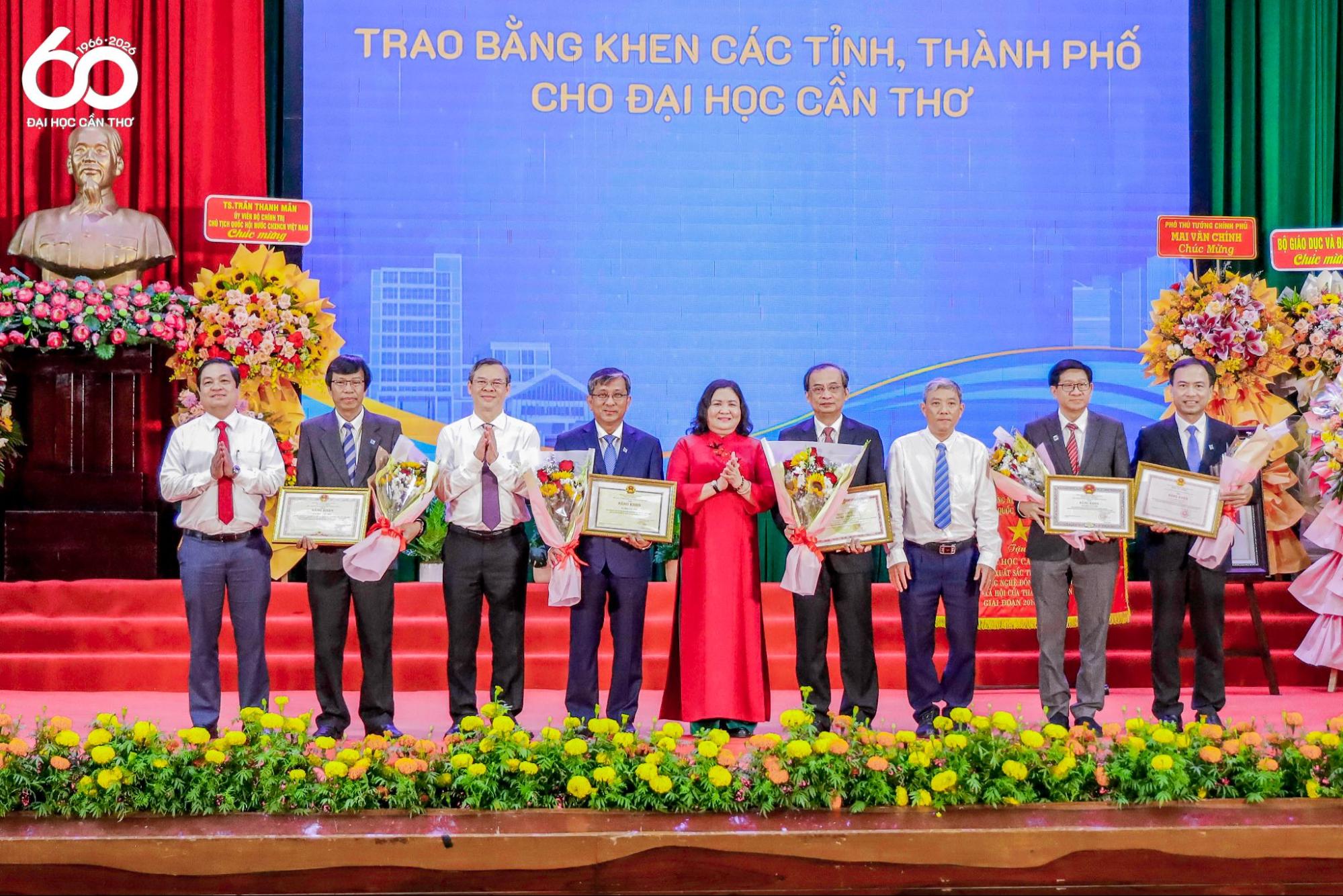
Representatives of the People’s Committee of Can Tho City and the provinces of An Giang, Ca Mau, Dong Thap, and Vinh Long presented Certificates of Merit to CTU for its contributions to the development of human resources, scientific research, and technology transfer in the region
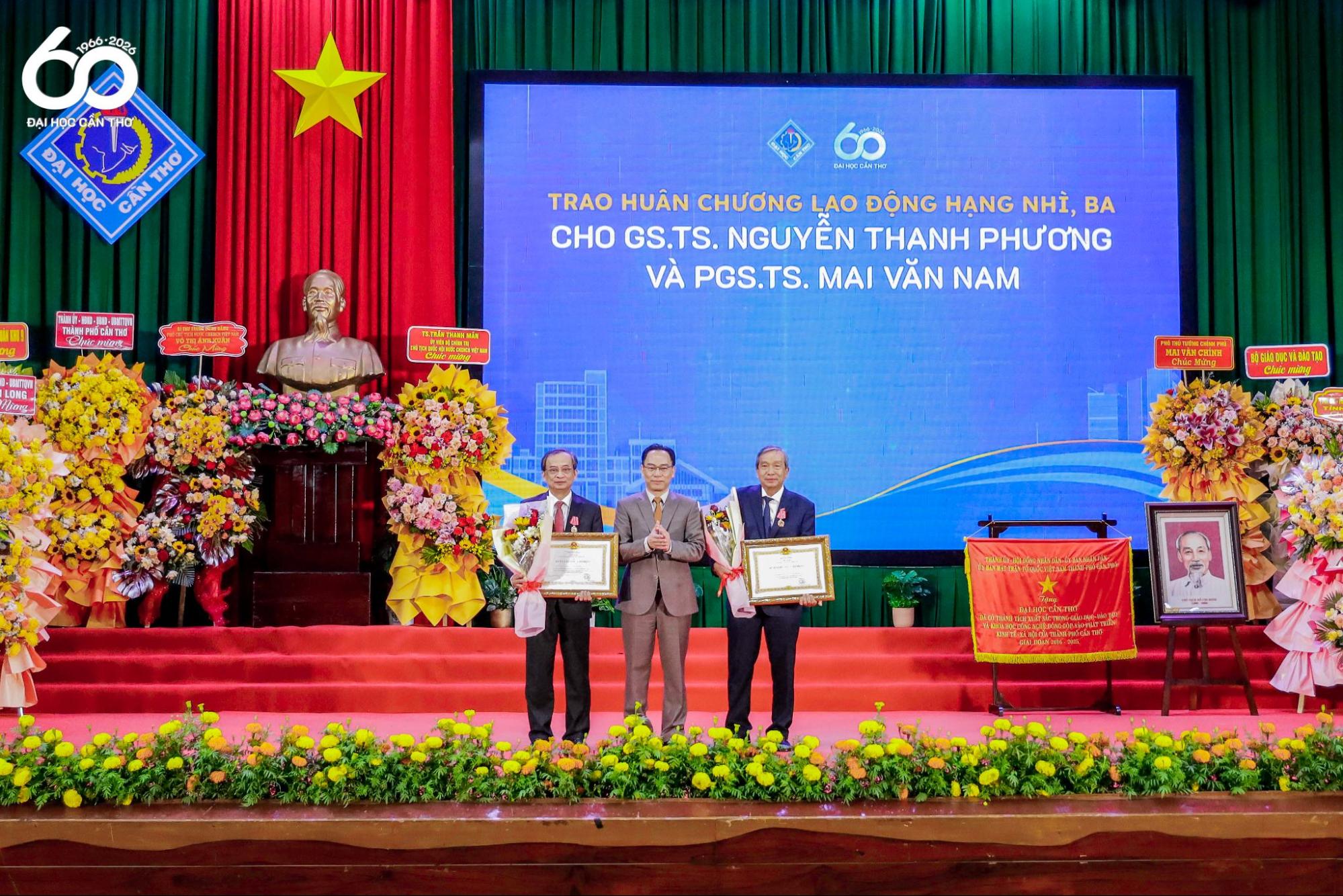
A representative of the Ministry of Education and Training announced the decision of the State President to award the Second-Class Labor Order to Prof. Dr. Nguyen Thanh Phuong (left) and the Third-Class Labor Order to Assoc. Prof. Dr. Mai Van Nam (right)
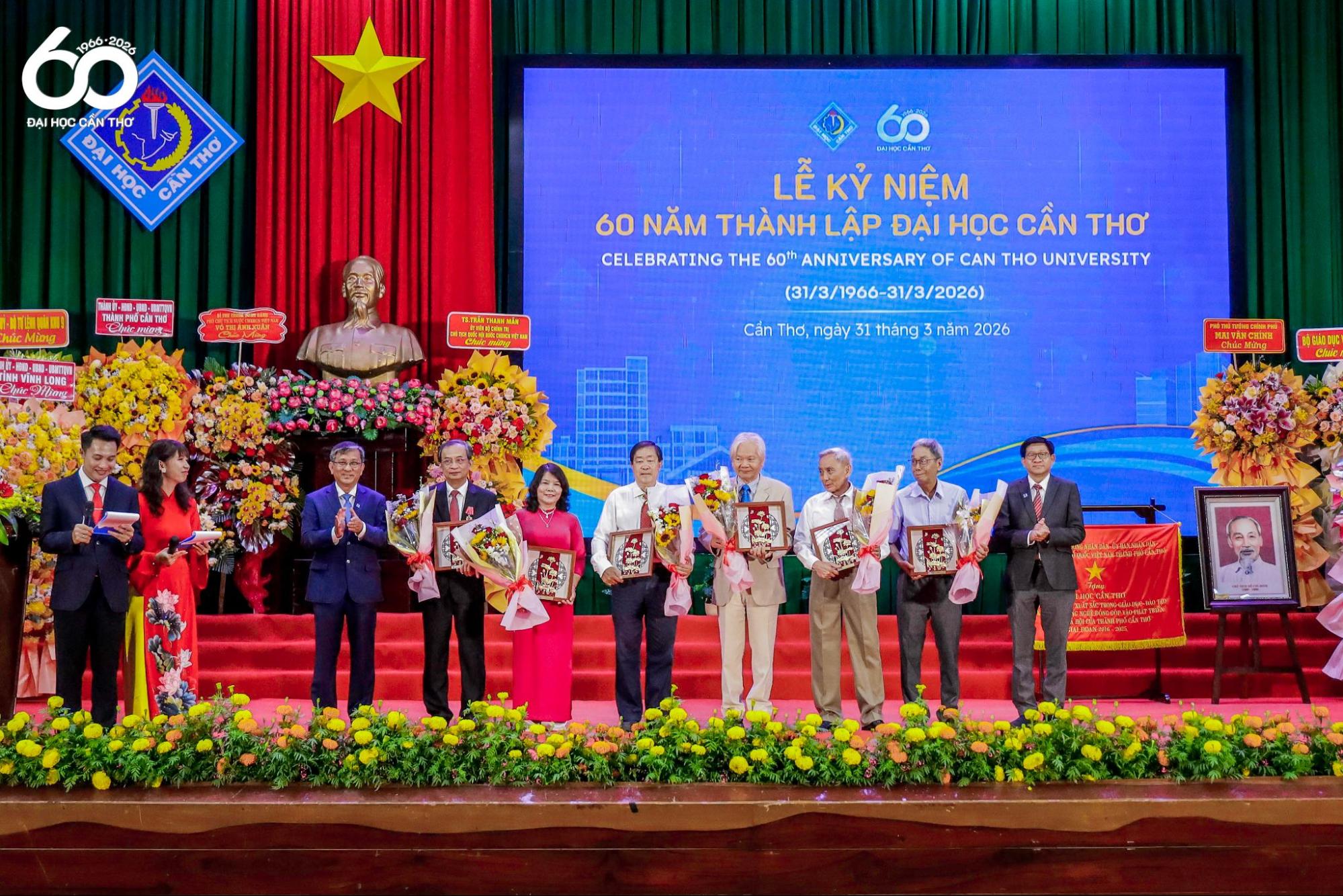
CTU respectfully extends its profound gratitude to generations of leaders across different periods - those who have wholeheartedly guided the University through historical challenges to achieve its present stature. Their legacy embodies a continuous flow of intellect, resilience, and vision - converging into an enduring aspiration for development
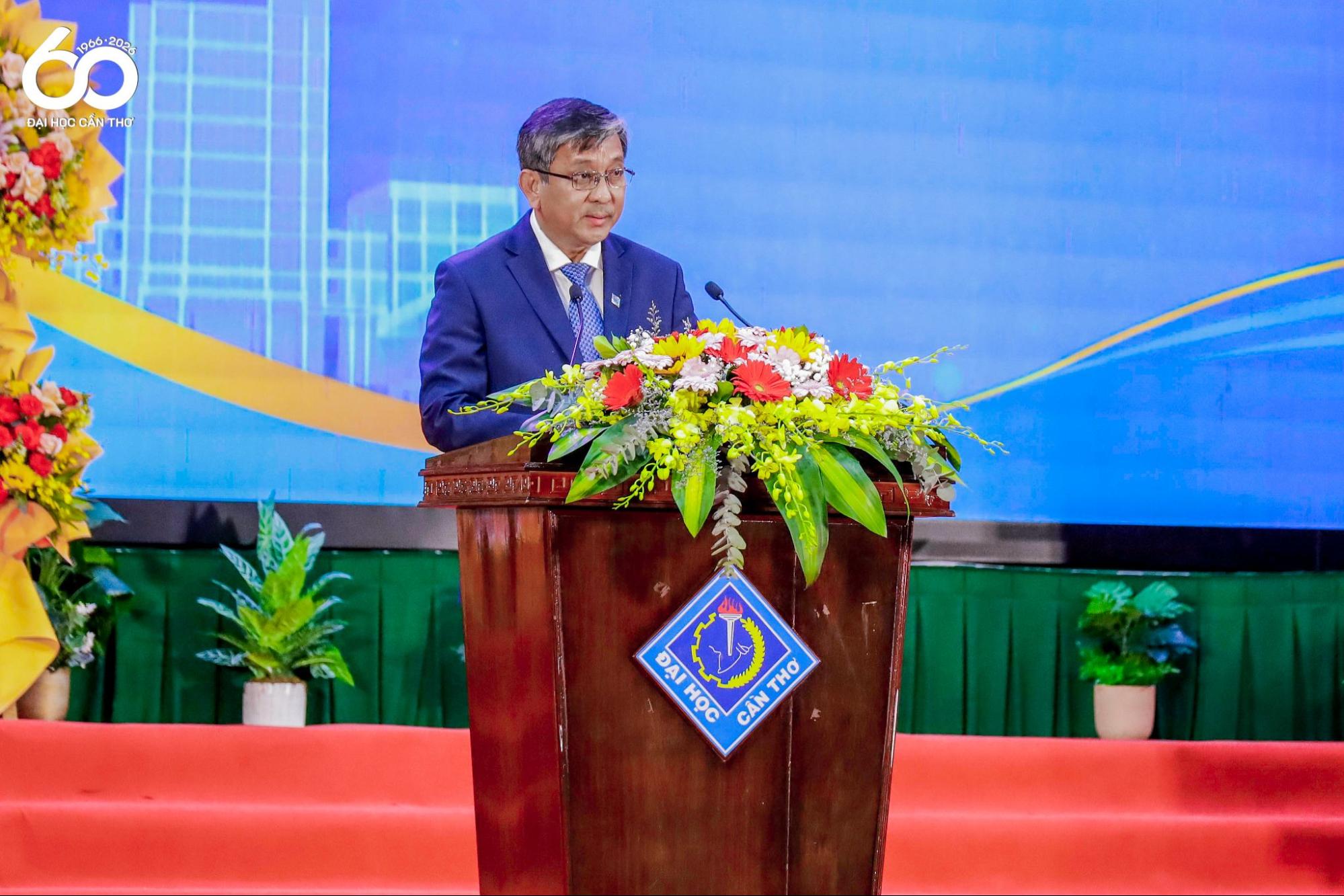
Assoc. Prof. Dr. Tran Trung Tinh, on behalf of the Party Committee, the Board of Directors of CTU, and all faculty members, staff, and learners, expressed sincere appreciation and fully acknowledged the valuable and insightful guidance provided by the leadership of the Ministry of Education and Training, as well as the authorities of Can Tho City. CTU would translate these directions into concrete action programs and implementation plans, ensuring their effective and comprehensive realization in the coming period
In the years ahead, as higher education undergoes profound transformation, and in light of its distinctive mission and standing, CTU has clearly defined its path forward with a proactive mindset and a long-term vision. Building upon decades of achievement, the University stands at the threshold of significant opportunities for breakthrough development, while also facing considerable challenges - particularly the imperative of deep integration into the global higher education system. CTU remains steadfast in its commitment to cultivating a distinctive identity and safeguarding its core values throughout its sustainable development journey.
Key national policy frameworks - including the Politburo’s Resolution No. 71-NQ/TW (2025) on breakthroughs in education and training, and Resolution No. 57-NQ/TW (2024) on advancing science, technology, innovation, and national digital transformation - together with the Government’s resolution on “Upgrading Can Tho University into a center for high-quality human resource training, scientific research, and application for Can Tho City and the Mekong Delta,” will serve as vital pillars for the University’s continued development. These frameworks will further reinforce its position and contribute to the development of a high-quality academic environment.
Looking ahead to 2035, CTU aspires to achieve the following strategic milestones:
First, to be ranked among the top 451–500 universities in Asia, within the top 1,000–1,200 globally, and among the top 301–500 worldwide in selected disciplines.
Second, to become a center of excellence and talent development, taking a leading role in developing high-quality human resources and pioneering education in strategic and key technological domains, with a learner population exceeding 60,000, including approximately 2,000 international students.
Third, to establish itself as a leading hub for scientific research, technological development, and innovation, making significant contributions to science, digital transformation, and entrepreneurship in the Mekong Delta and nationwide, while further strengthening its core disciplines in agriculture, aquaculture, environment, engineering and technology, as well as economics and socio-cultural studies.
Fourth, to continue developing a highly qualified academic workforce, particularly in emerging and strategic technologies, striving for over 70% of faculty members to hold doctoral degrees and at least 25% to hold the titles of professor or associate professor.
Fifth, to enhance its role as a dynamic and effective hub for cooperation with domestic and international partners, fostering stronger linkages across academia, industry, and government.
Sixth, to further invest in infrastructure development toward a modern, well-integrated, and internationally standardized university system, with a focus on advanced laboratories in engineering, technology, and biotechnology, meeting the evolving demands of education, research, and application.
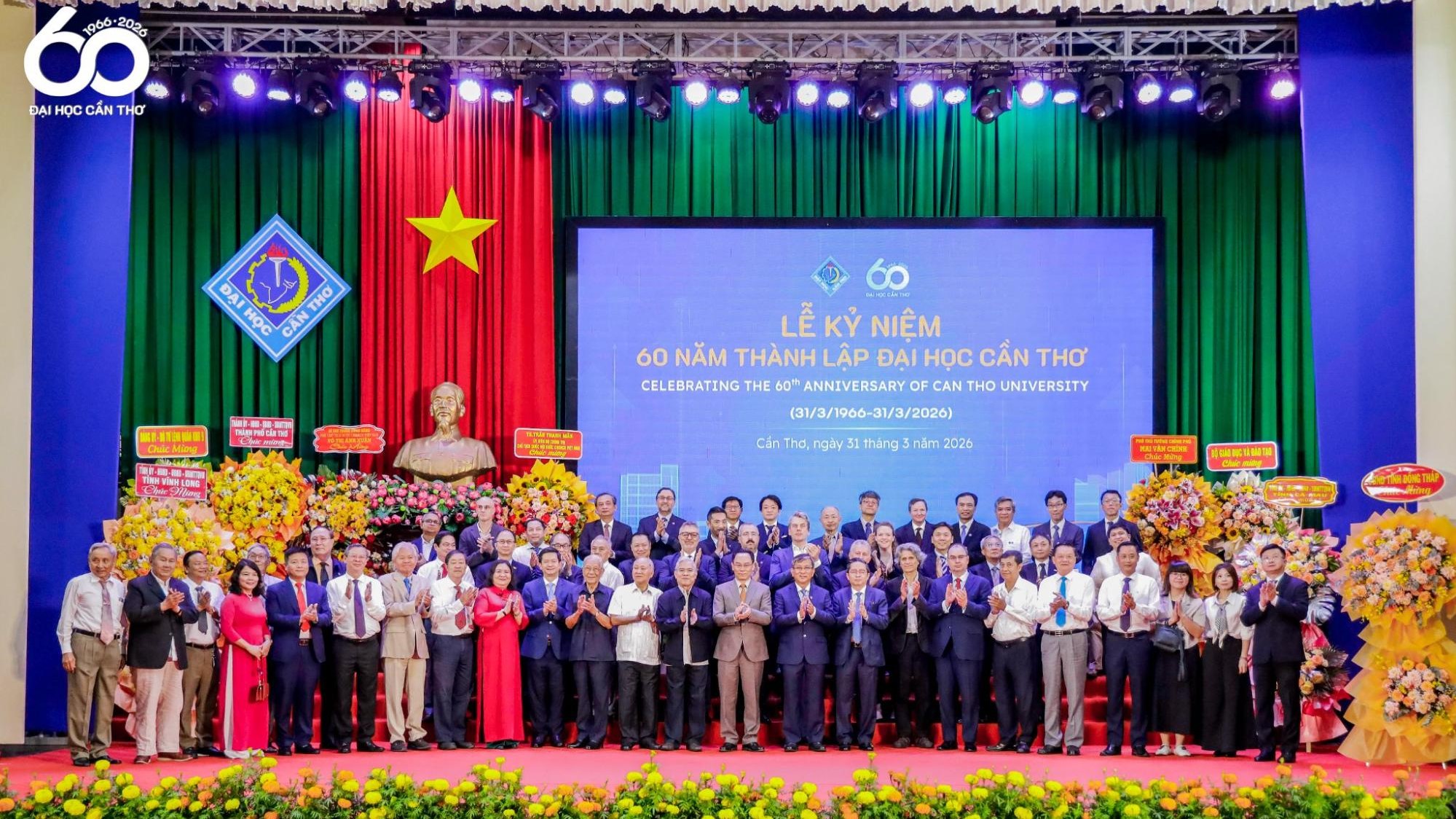
Commemorative photo
Looking back over sixty years, CTU has evolved far beyond a mere educational institution; it has become a symbol of knowledge, trust, and the enduring aspiration for progress of an entire region. Every step of its growth has been inseparable from the transformation of the Mekong Delta and the nation as a whole. The University has remained steadfast in its guiding principle: “Learning must go hand in hand with practice – scientific research must be closely linked to reality,” while consistently serving the community. This philosophy has brought generations of faculty and students to the fields, factories, and enterprises, forging a close bond between academia and real life. The image of more than 2,000 lecturers and students standing side by side with farmers to combat the brown planthopper outbreak in 1977–1978 remains deeply etched in the collective memory of the Mekong Delta. Research initiatives on acid sulfate soil improvement, crop varieties and cultivation techniques, aquaculture, animal husbandry, and agricultural processing have not only contributed to poverty reduction but have also helped position the Mekong Delta as the nation’s leading exporter of key agricultural products. At the same time, the University has advanced the application of technology and information systems, contributing to the modernization of production, digital transformation in management and operations, and actively engaging in forums and conferences to provide policy consultation, critical insights, and strategic recommendations for the region’s socio-economic and cultural development. Moreover, with more than 50,000 graduates in teacher education, CTU has played a vital role in uplifting educational standards, nurturing talent, and developing a highly skilled workforce for the region.
Standing at a new historical milestone, this journey does not pause—it expands toward even broader horizons. CTU remains profoundly grateful to the intellectuals and people of the Mekong Delta, whose dedication laid the foundation for its establishment and early development. From those humble beginnings, the University has grown into a dynamic and leading institution, effectively serving the Mekong Delta and the nation.
Sixty years of Creating knowledge – Advancing frontiers.
From this foundation, the mission for the future of the Mekong Delta continues - steadfast, innovative, and reaching farther than ever before.
(Website Editorial Board)