 Undergraduate
 Aiming to promote international cooperation programs on high-quality human resource development, on December 17, 2025, Can Tho University (CTU) held a working session and signed a Memorandum of Understanding (MoU) with The TOA Institution. The program took place in a hybrid format at the Administration Building.
Attending the meeting were Mr. Tomita Sho – Board Chairman and Chief Executive Officer, along with the delegation from The TOA Institution. On the CTU side, there was Prof. Dr. Tran Ngoc Hai – Vice Rector, along with representatives of functional departments and leaders of affiliated training units.

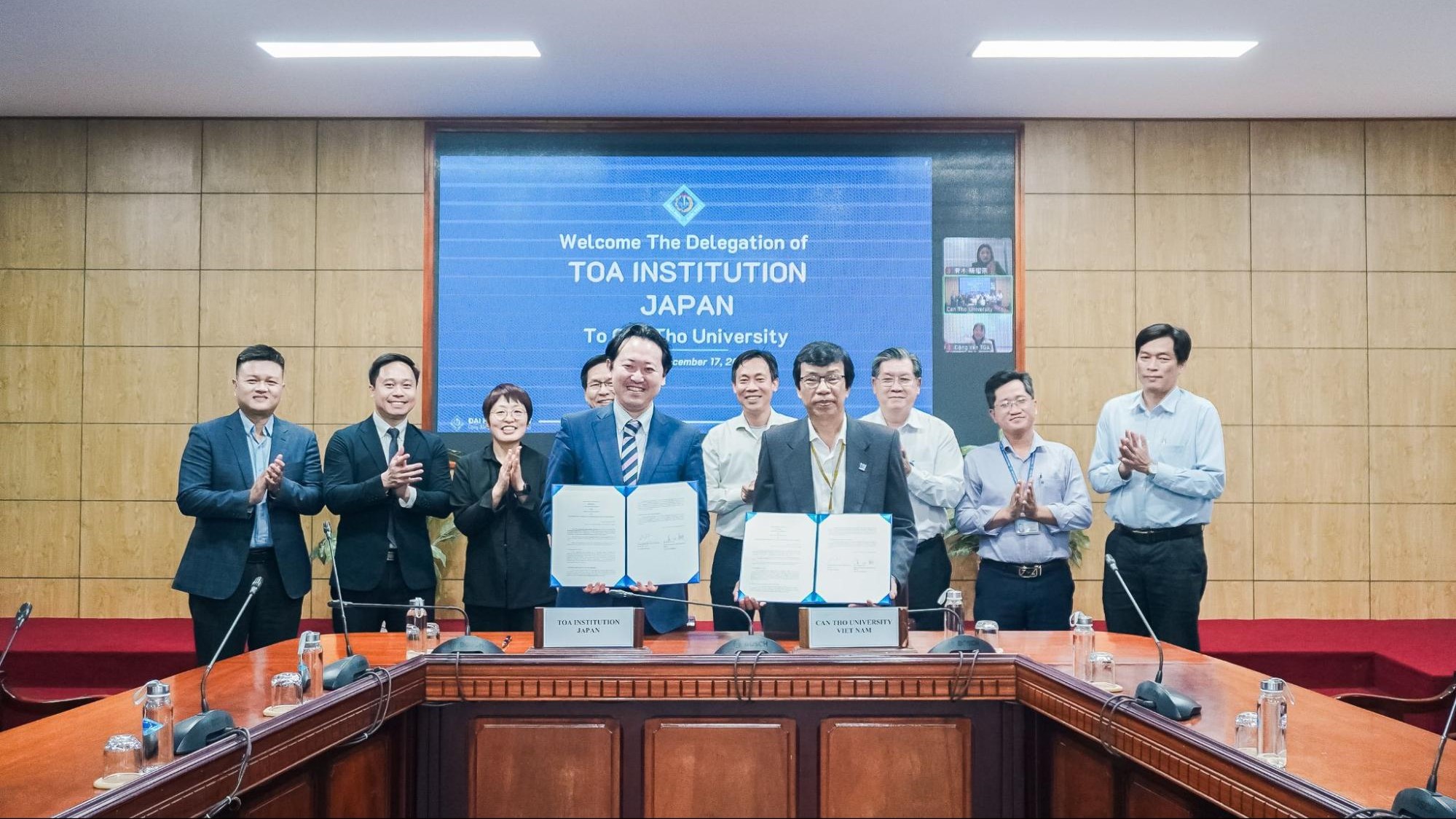
Representative of The TOA Institution (left) and representative of CTU (right) signing the MoU
During the discussion session on the strategic direction between the two units in the coming period, Prof. Dr. Tran Ngoc Hai stated that CTU wishes to develop bilateral cooperation relationships with enterprises affiliated with The TOA Institution, especially in key fields such as agriculture, economics, engineering, and technology. The CTU representative also proposed designing new programs and teaching organization methods to integrate student exchange activities for internships at Japanese enterprises. Thereby, students will have the opportunity to access advanced technology and machinery and experience a practical working environment.

CTU leadership representative expresses the desire to tighten cooperation with The TOA Institution in key fields
The Japanese partner also expressed agreement with the proposed ideas. Notably, Mr. Tomita Sho emphasized the shortage of highly skilled labor in factories and enterprises in Japan, especially in the agricultural sector. Accordingly, The TOA delegation shared that the goal of cooperation is to focus on training human resources in the digital context, ensuring high professional practical skills alongside strong theoretical competence.

The TOA Institution delegation during the discussion session
The working session and signing ceremony between CTU and The TOA Institution not only opened up diverse cooperation opportunities in many fields, particularly in education and training of high-quality human resources, but also laid the foundation for a long-term and sustainable bilateral cooperation relationship. This is a concrete step demonstrating the direction of internationalizing education linked to the practical needs of the labor market, contributing to creating human resources with professional competence, vocational skills, and adaptability in the context of globalization. Thereby, CTU continues to affirm its position as the key center for training and developing human resources in the Mekong Delta region, while simultaneously making practical contributions to the national strategy for high-quality human resource development in the new period.

Group photo
(Website Editorial Board)